How to Write a Developmental Observation That Actually Captures What You Saw
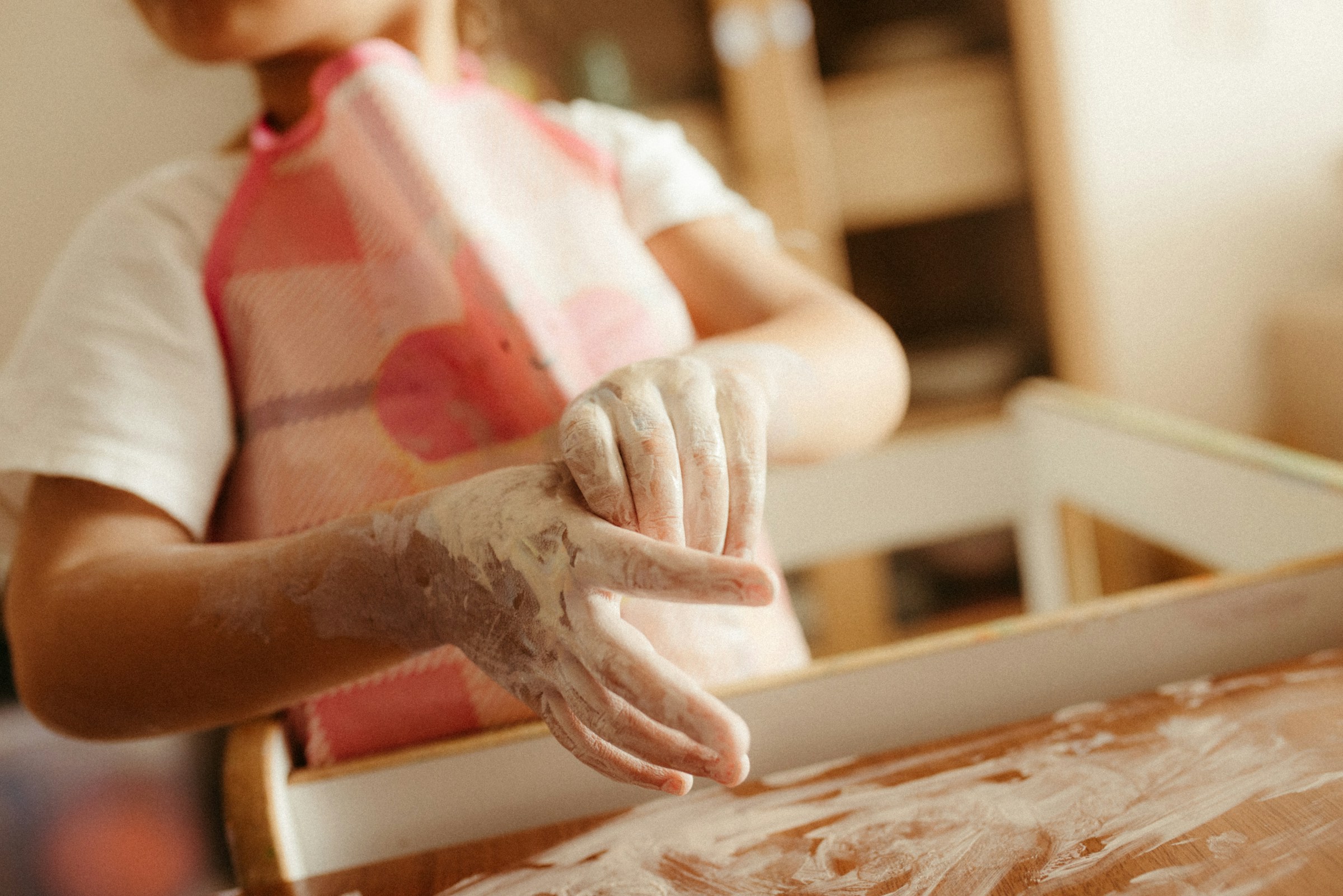
You're standing at the sensory table. A four-year-old named Marcus has been there for twenty minutes. He's not playing with the sand the way the other kids are — he's moving it from one side to the other in careful, even strokes, watching how it falls, adjusting his wrist, doing it again.
You know something important just happened. You reach for your notebook.
And then what you write is: "Marcus played at the sensory table."
That gap — between what you saw and what you wrote — is the thing we need to talk about.
Why Most Observations Fall Short
Developmental observations are one of the most important tools an ECE has. They're how you understand what a child is working on, what they need next, and how you can build your program around the actual children in the room — not a generic age group.
But in practice, under the pressure of a full room and a packed day, observations often shrink down to timestamps and activity labels. "Sophie played in the dramatic play area." "Liam had a hard time at circle." These notes aren't wrong. They just don't carry any weight when you sit down to plan, or when a licensing review asks how you're supporting individual development.
A strong observation captures three things: what the child did, how they did it, and what it might mean developmentally. Most written observations nail the first, skip the second, and never make it to the third.
What a Good Developmental Observation Looks Like
Let's go back to Marcus at the sensory table. Here's a stronger version of that observation:
"Marcus spent approximately 20 minutes at the sensory table working independently. He used a flat palm to move sand from one end of the table to the other in slow, deliberate strokes, pausing each time to watch how the sand settled before repeating the motion. He tried the same movement with two fingers, then his whole hand, comparing results. He did not initiate conversation with nearby peers but glanced at them several times. When a peer accidentally bumped his arm, he paused, looked at the disrupted sand, and resumed his original motion without any verbal reaction."
That's one observation. It takes about 45 seconds to write if you jot notes in the moment and expand them after. And it tells you — and anyone reading it — something real about Marcus: his capacity for sustained focus, his emerging scientific thinking (testing variables, comparing results), his sensory preferences, his current comfort level with peer interaction.
You can plan from that. You can speak to his family about it. You can connect it to ELECT.
How to Connect Your Observation to ELECT
The ELECT framework — Early Learning for Every Child Today — is how Ontario describes child development across nine learning areas. When you write a developmental observation, you're not just documenting a moment. You're gathering evidence that maps to where a child is within those areas.
Marcus's observation touches a few:
Inquiry and problem solving (Cognitive) — he's testing cause and effect, comparing techniques, adjusting his approach
Self-regulation (Emotional) — he stays focused through a long task and responds calmly to an unexpected disruption
Peer relationships (Social) — he's aware of peers but working through what comfortable proximity looks like for him right now
You don't need to write all of this into the observation itself. But when you go to plan for Marcus — what to put in the room, what kind of activity will stretch him, what to say to his family — those ELECT connections are what makes your planning intentional instead of intuitive.
A Simple Framework for Writing in the Moment
You don't have to be a great writer to write a great observation. You just need a habit of noticing and a template that gets out of your way.
Here's one that works:
What — What was the child doing? Be specific about the action, not just the location or activity.
How — How did they do it? Body language, pace, approach, problem-solving, language, social dynamics.
What it might mean — What does this suggest about where they are developmentally? What ELECT domain does it point to?
In the moment, you might just jot: "Marcus — sensory table — 20 min — deliberate sand movement, testing with different hand positions, calm when bumped."
That's enough. When you write it up, those notes become the full observation above.
Common Mistakes to Avoid
Evaluative language instead of descriptive language. "Sophie had a great morning" tells you nothing. "Sophie initiated a pretend scenario with two peers, assigned roles, and redirected the play when it went off-track" tells you she's doing something interesting with leadership and narrative thinking.
Deficit framing. "Liam couldn't sit still at circle" centres what he didn't do. "Liam moved frequently during circle — lay down briefly, stood at the edge of the group, returned to sit after approximately 4 minutes" describes what actually happened and opens the door to understanding why.
Skipping the "how." The action is the minimum. The how is where the developmental information lives. Two children can both build a block tower — one stacks randomly, one tries to balance, knocks it over, adjusts, tries again. Those are two completely different observations.
Writing it three days later from memory. Even a rough three-word note in the moment is worth more than a detailed reconstruction on Friday afternoon. Carry something to jot on — a pad, your phone, a sticky note on your clipboard. The full write-up can happen later.
What Happens When You Get This Right
When your observations are specific and ELECT-connected, a few things change.
Planning gets easier. You're not guessing what the room needs — you're responding to what you actually saw. Your weekly plans start to feel like they belong to your specific group of children, not a generic preschool room.
Documentation becomes an asset instead of a burden. When a licensing review or AQI assessment asks how you're tracking individual development, you have real evidence — not a folder of timestamped activity labels.
Conversations with families get richer. "Marcus is working on sustained focus and problem-solving — I've noticed him doing this at the sensory table, here's what I observed" is a completely different conversation than "Marcus had a good week."
And over time, the practice of observing carefully makes you a better educator. You start seeing more. Noticing what a child's hands are doing, not just where they're standing. That changes how you respond, what you set up in the room, how you talk to children during play.
A Final Thought
The children in your room are showing you things every single day. The observation is just how you hold onto what they're telling you long enough to do something with it.
You don't need perfect prose. You need enough detail to remember what you saw, and enough connection to development to know what it means.